
The asymmetry of words
Some sentences are load-bearing. You read them once and they hold weight for years — a line from Marcus Aurelius on a hard morning, Thoreau at the close of Walden reminding you that the sun is but a morning star. Most software treats words as content: interchangeable, infinite, disposable. RiseHush treats them as objects: few, chosen, kept.
That difference sounds poetic, but it is architectural. A feed optimized for endlessness needs you to keep scrolling. A library optimized for enough needs you to stop — and designing for stopping changes everything: the pacing of the feed, the absence of engagement mechanics, the way a streak forgives rather than punishes.
Ritual, not habit loop
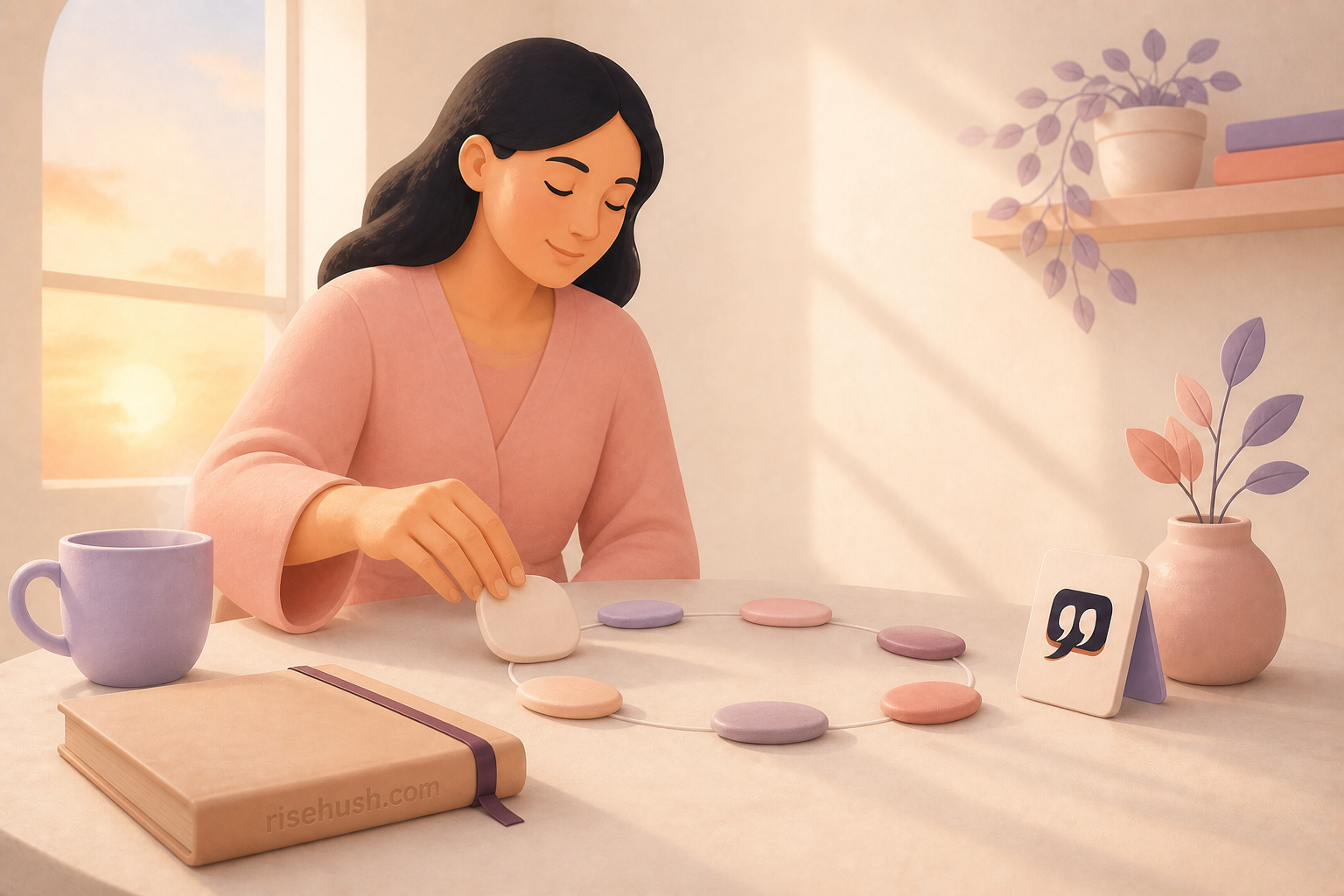
A habit loop is a trap that closes; a ritual is a door that opens. The daily-inspiration alarm doesn't blare — it arrives with a sentence. The Lock Screen widget doesn't beg for a tap — it simply stands there, typeset like a small poster, asking nothing.
We think of RiseHush as furniture for the mind's hallway: something you pass every day, that quietly changes how you walk.
Enough, by design
Thirty-five categories sounds like a lot until you notice what isn't there: no infinite recommendations, no autoplay, no social metrics. Six rooms are free forever. The rest open with Premium — not to gate your wellbeing, but because a small studio that refuses advertising has to keep the lights on honestly.
One sentence, at the right moment, correctly credited. That is the entire product. Everything else is typography.
Sources & verification
A product and design essay. The quoted Thoreau wording was checked in the original work; product facts were checked against the current RiseHush product record.